
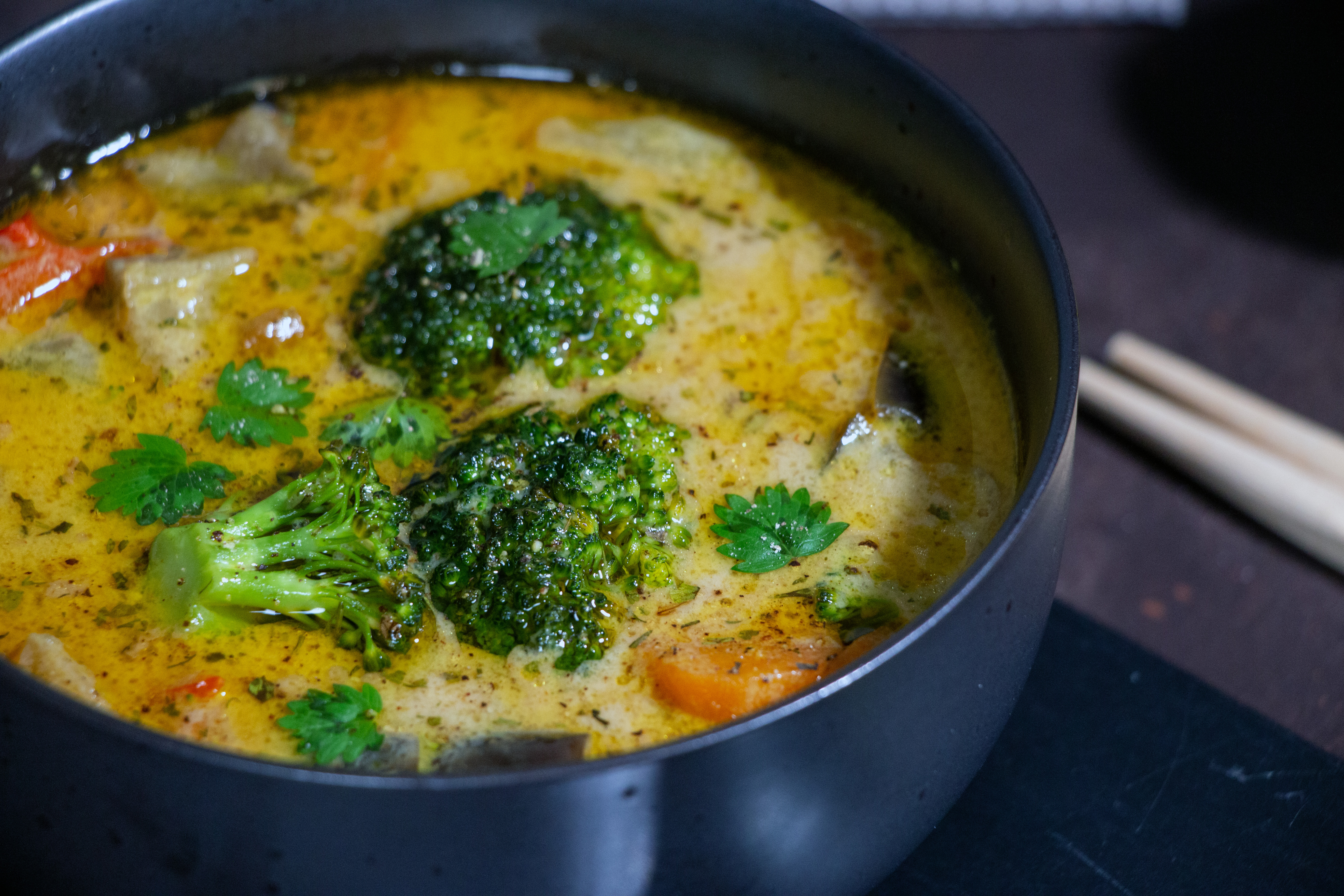
Today I have a very special dish for you, namely one of my absolute favorite comfort food recipes: a delicious vegetable Thai curry. Who can resist a creamy Thai curry? Well, I certainly can't. And with an extra large portion of vegetables, this dish is also really healthy and wholesome. If I had to describe this recipe in three words, I would choose the following: Light yet sophisticated and incredibly tasty. A recipe that is sure to end up on your list of favorites.

As we all know, the special thing about a curry is the mixture of different spices. Turmeric, ginger, cumin, cardamom, coriander, chili and pepper are often used. But other spices such as cinnamon, cloves, mustard seeds or black cumin are also often found in curries.
In fact, the recipe and the choice of spices vary depending on the origin or region. The preparation of the sauce also differs depending on the region. Basically, a curry is a dish with a creamy sauce and lots of spices, which is supplemented with vegetables, fish or meat.
The great thing about this vegetable curry is that you can swap out the vegetables as you wish or use up all your leftovers. This means you always have a new flavor and the meal never gets boring. I often use carrots, peppers, zucchinis, broccoli, mushrooms and eggplants. But spinach, fennel and cauliflower are also excellent in the creamy sauce.
For the curry sauce, I use a red Thai curry spice paste and canned coconut milk. It is important that you don't shake the can of coconut milk before use. When you open the tin, you will notice that a solid layer has formed on the surface. And this is exactly what we want to use in the first step. Carefully skim off the solid mass and pour it into the pan. Leave the remaining coconut water in the tin until later. I then add my spice paste and some ground curry powder to the coconut cream. The heat will dissolve the coconut cream and the sauce will finally be nice and creamy.
I first fry my onions and garlic in this coconut curry cream and then add the rest of the vegetables. As soon as all the vegetables are coated with the cream, I add the rest of the coconut water from the can and add a little extra water if necessary so that the vegetables can simmer nicely in the sauce.

Just before serving, I reach for my absolute secret weapon in the kitchen when preparing Asian dishes: my lemongrass essential oil. How often I used to get annoyed or stressed because I wanted to make a curry and I didn't have the lemongrass. If I did make it to the supermarket, the selection of fresh lemongrass was usually very limited or I had to buy a whole bunch, even though I only needed one stalk .... Really tedious. Fortunately, I no longer have this little problem. Thanks to lemongrass oil, I can now prepare a curry at any time and always have fresh lemongrass to hand. For me, the aroma of this spice simply belongs in a good Thai curry. I can only recommend that you also buy a spice oil like this and have your own secret weapon for the kitchen at home.
Now just add a little soy sauce and the delicious, creamy vegetable curry is ready and on the table in 30 minutes.
I prefer to serve it with basmati rice, as I think this is the perfect side dish for the vegetable curry. Alternatively, you can also serve it with fresh naan bread. Freshly squeezed lime juice and chopped coriander are also essential to add freshness to the dish. If you belong to the "anti-coriander" group, simply leave it out.
Have you made the recipe? Tag @oatoclock_blog on Instagram so we can see the result 🙂

Cooking utensils
- 1 wok or large frying pan
Ingredients
- 4 Carrots
- 1 Paprika red
- 2 small zucchinis
- 2 small broccoli heads
- 5 Mushrooms
- 2 Onions
- 2 Garlic cloves
- 2-4 TABLESPOONS curry paste red
- 2 tins Coconut milk 400ml each
- 1 Lime
- 1 drop lemongrass oil or 1 stalk of lemongrass
- 2-4 TABLESPOONS soy sauce
- fresh coriander
- 400 gr Basmati rice
Instructions
- Peel or wash the vegetables, prepare and cut into pieces.
- Skim off the cream from the coconut milk and mix with the curry paste in a wok or frying pan. Simmer briefly until small oily bubbles form.
- At the same time, wash the rice well and cook according to the instructions on the packet.
- First add the onion and garlic to the curry sauce. Sauté briefly or allow to simmer.
- Then add the remaining vegetables (with the exception of the broccoli and mushrooms) to the wok and stir-fry briefly in the creamy curry sauce. If you are using lemongrass instead of essential oil, add this to the sauce. Then add the rest of the coconut milk and bring to the boil briefly. Reduce the heat and simmer over a low heat for a few minutes until the vegetables have reached the desired consistency (some people like the vegetables crunchy, others prefer them softly cooked). About 10 minutes before the end of the cooking time, add the broccoli and mushrooms so that they do not become too soft. Season to taste with a little lime juice, the soy sauce and 1 drop of lemongrass and season with salt and pepper as required.
- Serve the rice with the finished curry on the plates. Garnish with coriander to taste and serve. Enjoy your meal!
Post a comment